

Yogyakarta, March 31, 2026 – Center for Southeast Asian Social Studies (CESASS) held CESASS Talk #53 titled “Talking Border in a Borderless ASEAN” discussing maritime boundaries, ocean governance, and regional cooperation across ASEAN.
This discussion featured I Made Andi Arsana, S.T., M.E., Ph.D. from the Department of Geodetic Engineering at Universitas Gadjah Mada (UGM) as the speaker, whose expertise focuses on maritime boundary delimitation, marine geodesy, and international law of the sea, particularly within the framework of United Nations Convention on the Law of the Sea.
This discussion was led by Randy Wirasta Nandyatama, S.I.P., M.Sc., Ph.D. from the Department of International Relations UGM as the moderator, and was hosted by Rizky Demas Arjunanda as the MC.
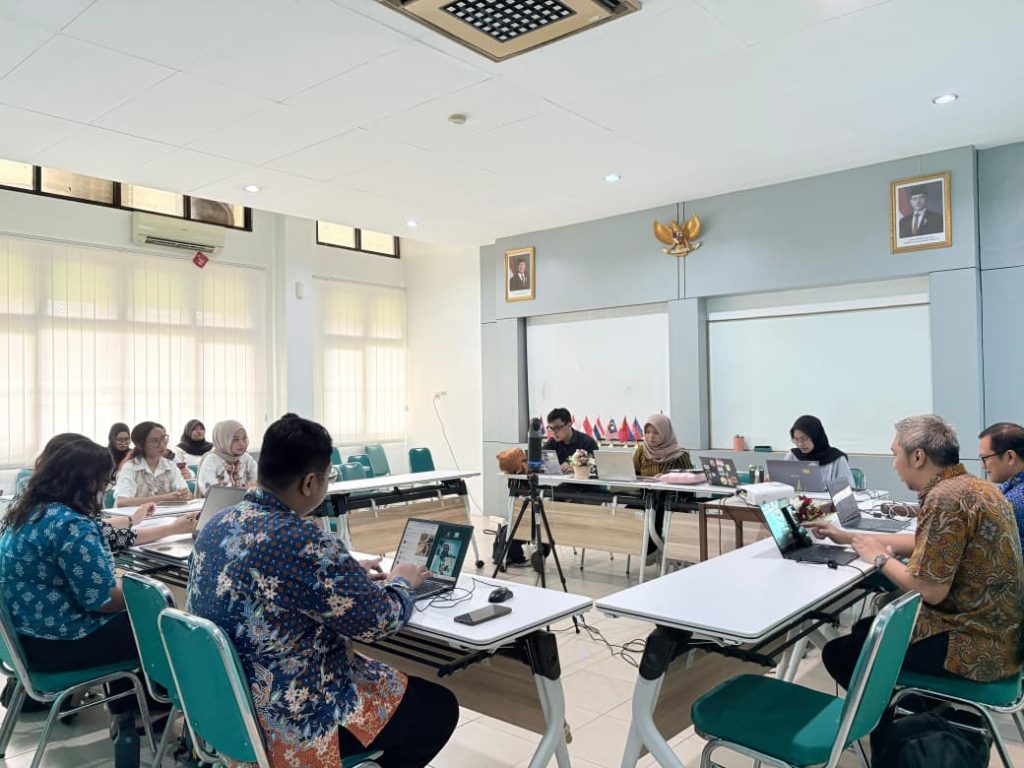
The discussion highlighted that existing boundaries currently apply only to the sea bed, not to the water column. The water column boundaries have not yet been settled.
Indonesia has proposed its own approach regarding water column boundaries; however, Malaysia holds a different view by using sea bed boundaries as the basis for water column boundaries.
This raises an important question: whether it is possible for Indonesia to have a water column boundary line that differs from its sea bed boundary line.
It was also explained that there are areas of sea bed that belong to Australia, where commodities such as sea cucumbers (trepang) attach to the sea bed during harvest season. If Indonesian or other foreign fishers unintentionally collect sea cucumbers in these areas during harvest season, such actions may be regarded as taking resources from another country’s territory.
Under international maritime law from the United Nations, Article 83 applies to the continental shelf, while Article 74 applies to the Exclusive Economic Zone (EEZ).
There is no specific measurement or fixed metric for maritime boundary delimitation. The provision only states the need for an “equitable solution.”
However, each country has its own interpretation of what is considered fair. What Indonesia considers equitable may not necessarily be seen the same way by countries such as Vietnam.
The discussion also noted that there is no definitive ruling from the United Nations regarding maritime disputes. This session served as a platform to understand the dynamics of maritime boundaries within the framework of international law, particularly in the ASEAN region.


