

Yogyakarta, Febuary 26, 2026 — There is growing public concern that poor waste management may contribute to the spread of disease—an issue that remains as urgent today as ever.
This topic was raised by Dr. Viola Schreer, a German anthropologist, during her recent visit to CESASS. Dr. Schreer, who currently works as postdoc researcher at the Institute of Social Anthropologist at the Austrian Academy of Sciences, has long-standing research experience in on human-environmental relations in Indonesia, particularly Central Kalimantan. She has been working in the region for since 2009, and is keen to further explore waste management challenges in Indonesia. Notably, Dr. Schreer speaks fluent Bahasa Indonesia and Ngaju Dayak, the lingua franca of Central Kalimantan, enabling her to engage directly and meaningfully with local communities.
Dr. Schreer seeks to examine how different kinds of waste potentially cause disease and how local communities respond to this challenge. She underscores that waste is not solely a local issue, but a multi-scalar phenomenon that requires investigation and action at various levels—from individuals to institutions, industries, and governments at both local and global levels. Until today, waste management remains highly relevant and calls for sustained commitment, innovation, and cross-sector collaboration.
The discussion at CESASS was both engaging and productive with rich insights from CESASS researchers and participating interns. The exchange highlighted the importance of interdisciplinary perspectives and community-based strategies in addressing waste-related challenges and promoting public health.
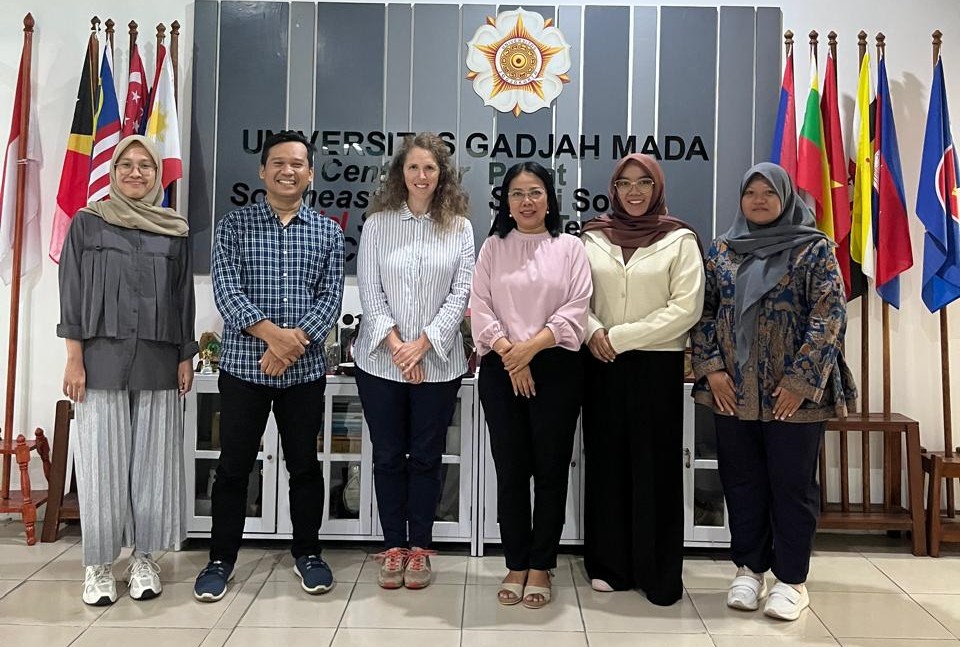
Accordingly, the conversation also connected with CESASS’s research theme on the cultural and moral dimensions of waste. Related publications include:
- Schlehe, J., & Yulianto, V. I. (2020). An Anthropology of Waste: Morality and Social Mobilisation in Java. Indonesia and the Malay World, 48(140), 40–59.
- Schlehe, J., & Yulianto, V. I. (2018). Waste, Worldviews and Morality at the South Coast of Java: An Anthropological Approach. Occasional Paper No. 41, 1–27.
These studies (supported by Ministry of Research, Technology and Higher Education (KEMENRISTEKDIKTI) of the Republic through the World Class Professor Program (No. 168.A10/D2/KP/2017) examine how waste is embedded in local worldviews, moral frameworks, and social movements in Java, demonstrating that waste management is not only a technical or environmental issue, but also a deeply social and cultural one.
Dr. Schreer’s visit marks an important step toward strengthening academic partnerships and deepening understanding of how societies can more effectively manage waste to safeguard public health and ensure environmental sustainability.


Reporter: CESASS Team