
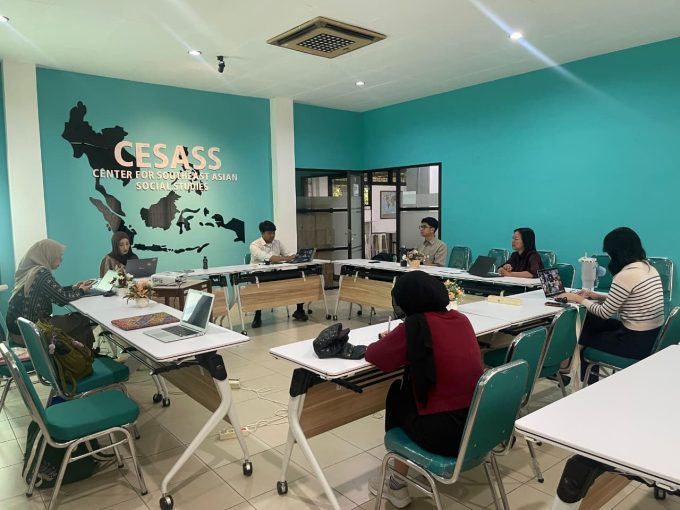
Yogyakarta, January 15, 2026 — Center for Southeast Asian Social Studies at Universitas Gadjah Mada (CESASS UGM) is back with CESASS Chat #47. Kicking off the first CESASS Chat of the year, the session featured Hüdanur Yildirim (Culture, Organisation & Management, Vrije Universiteit Amsterdam) and Farrel Pradana Widodo (International Relations, Universitas Islam Indonesia).
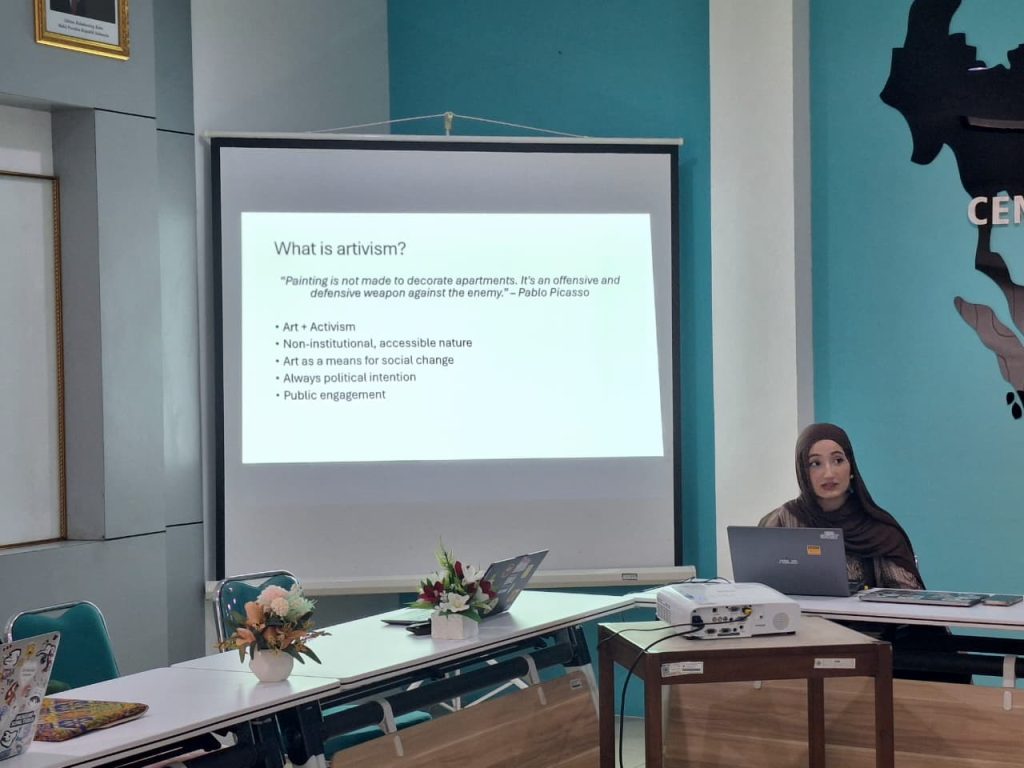
In the session called “Artivism in Indonesia”, Hüda explored artivism as the intersection of art and activism, asking how art functions as a form of political resistance and soft power in Indonesia, and how this role has evolved over time.
She addressed contemporary artivism in the context of the August 2025 protests, where public art and digital platforms intersected to express global solidarity and local resistance. Particular attention was given to the use of green and pink visual codes, which emerged as shared symbols across protest spaces.
Her presentation also traced the historical continuities of artivism, from visual resistance during the Dutch and Japanese colonial periods, through the era of censorship under the New Order, to the emergence of collective movements such as Taring Padi during the Reformasi period.
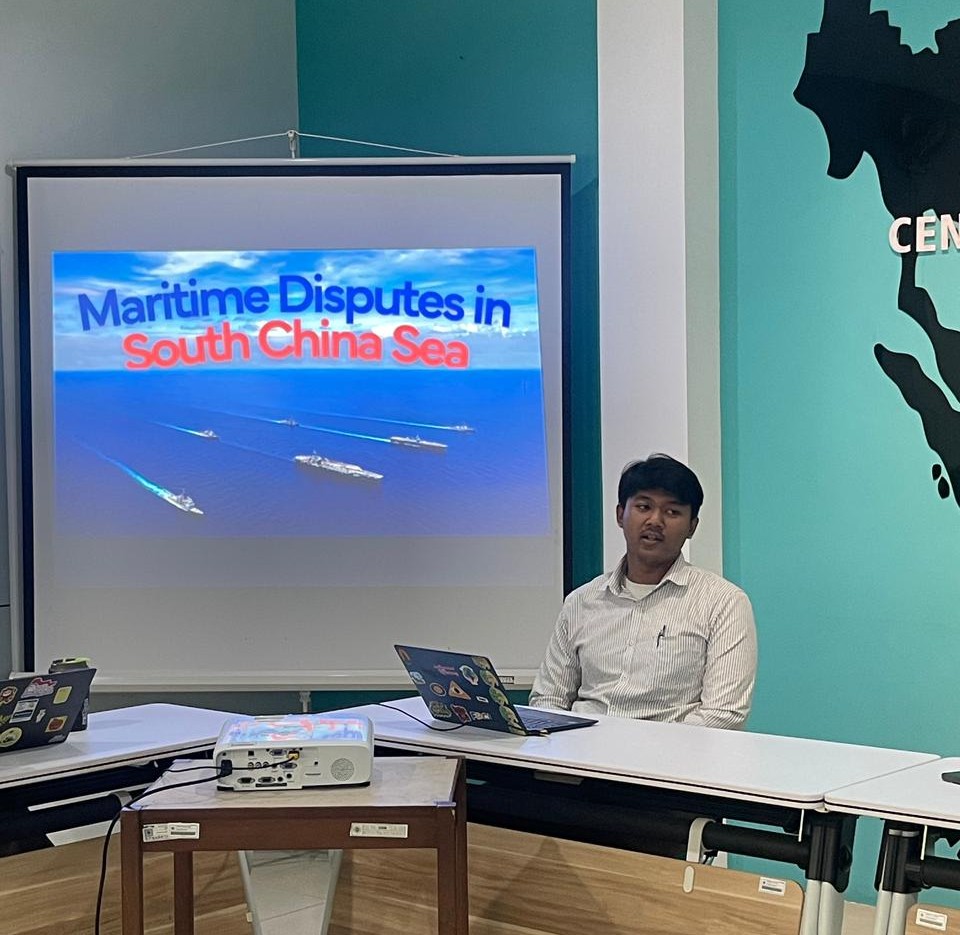
Farrel shared his perspective in the session titled “Maritime Dispute in South China Sea”, addressing why the South China Sea has become a highly contested region, and how competing territorial claims and strategic interests affect regional stability and security.
His presentation highlighted the strategic importance of the South China Sea, emphasizing how its role in global trade, rich natural resources, and overlapping territorial claims, particularly China’s Nine-Dash Line, have made the region a focal point of geopolitical tension.
He explored how competing national interests shape responses to the dispute, examining ASEAN’s position under UNCLOS, the limitations of regional dialogue mechanisms, and the influence of external powers in maintaining regional security and stability.
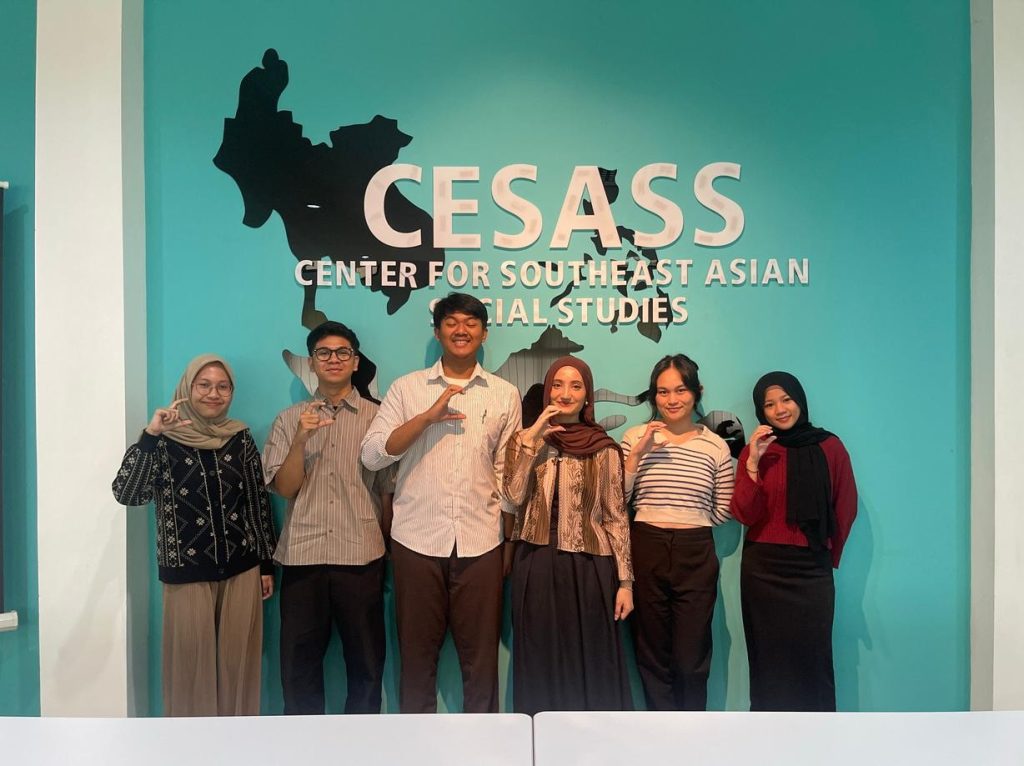
The Q&A session further expanded the conversation by drawing comparisons between artivism practices in Indonesia and in Hüda’s hometown in the Netherlands, highlighting differences in public space and government policy. The discussion also turned to the unresolved South China Sea dispute, critically examining why competing claims persist and how long-standing strategic interests continue to complicate efforts toward regional stability.
Reporter: Mellyana Nungki Pramitha