• Tentang UGM
  • IT Center
  • English
    • Bahasa Indonesia
    • English
Universitas Gadjah Mada Center for Southeast Asian Social Studies
Universitas Gajah Mada
  • Home
  • About Us
    • Overview
    • Researcher
    • Partner Researcher
    • Partner Institution
    • Library
  • Research
  • Program
    • International Conference
    • SUMMER COURSE
    • CESASS Research Fellowship
    • INTERNSHIP
    • CESASS TALK
    • CESASS Chat
    • SEA Movie
    • Workshop
  • Publication
    • Journal
    • Book
    • Proceeding
  • Academic Essay
    • Culture & Linguistics
    • Digital Society
    • Economic and Social Welfare
    • Education
    • Media & Communication Studies
    • Law & Human Rights
    • Politics and International Relations
    • Article Guidelines
  • Home
  • Activity
  • [SEA Talk # 19] Waste, Worldview, and Morality: An Inclusive Approach

[SEA Talk # 19] Waste, Worldview, and Morality: An Inclusive Approach

  • Activity, SEA Talk_eng
  • 10 March 2018, 13.59
  • Oleh: pssat
  • 0

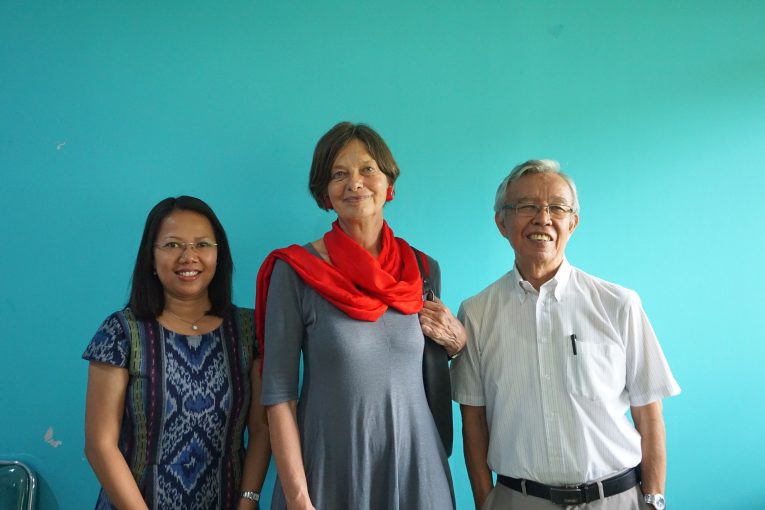
As a form of cooperation between CESASS UGM with University of Freiburg, Prof. Dr. Judith Schlehe accompanied by a researcher from CESASS UGM, Vissia Ita Yulianto, shared their knowledge in the form of workshops (08/03/18). The workshop held in the Indonesian Room of CESASS UGM Library presented the topic of waste management which is still one of the problems in Indonesia. This problem is certainly very influential with the stability, including the stability of undersea ecosystems. Therefore, this study took a case study in the southern maritime area of Yogyakarta which includes part of Gunung Kidul Regency under the title “Waste, Worldview, Morality: An Inclusive Approach”.

This research emerged from the problems in Indonesia as the second largest country in its contribution to pollution in the maritime region after China. With an inclusive approach, this research aligned the perspective of waste management in terms of society, economy, and worldview. After observation and data collection, they found that the people living in the village agreed that waste was one of the problems, but their contribution and awareness were still very weak.

Until now, the handling of people to waste is limited to selling garbage to rongsok and dumping garbage in landfills. The Waste Bank system has been introduced in the community, but their participation is still lacking. Discussion of the results of this study closed by drawing the conclusion that the success of the waste management program is seen from the strengths of policy makers, the participation of the government, and the understanding of the community about the importance of preserving nature especially the southern maritime region by reducing the amount of plastic use in daily life. (Imam Al Rezki)

Recent Posts

  • Behind the Scene: How Film Shapes Tourism in Southeast Asia
  • CESASS CHAT #4: “Aquaculture and Climate Resilience in Indonesia” by Edward Atkinson
  • Research Progress on “Bridging Ambitions and Realities: Indonesia’s Pacific Elevation, Ocean-Based Climate Diplomacy, and Regional Leadership”
  • Making the Air Breathable in Southeast Asia: Assessing the Impact and Challenges of Thailand’s Clean Air Act on Addressing Choking Air Pollution
  • Reviving Partnership with Pusat Riset Ilmu Sosial dan Budaya Universitas Syiah Kuala (PRISB USK)
Universitas Gadjah Mada

Center for Southeast Asian Social Studies
Universitas Gajah Mada

Gedung PAU, Jl. Teknika Utara
Daerah Istimewa Yogyakarta 55281
pssat@ugm.ac.id
+62 274 589658

Instagram | Twitter | FB Page | Linkedin | Youtube

© Universitas Gadjah Mada

KEBIJAKAN PRIVASI/PRIVACY POLICY