
• Tentang UGM
  • IT Center
  • English
    • Bahasa Indonesia
    • English
Universitas Gadjah Mada Center for Southeast Asian Social Studies
Universitas Gajah Mada
  • Home
  • About Us
    • Overview
    • Researcher
    • Partner Researcher
    • Partner Institution
    • Library
  • Research
  • Program
    • International Conference
    • SUMMER COURSE
    • CESASS Research Fellowship
    • INTERNSHIP
    • CESASS TALK
    • CESASS Chat
    • CESASS Vodcast
    • SEA Movie
    • Workshop
  • Publication
    • Journal
    • Book
    • Proceeding
    • Policy Brief
  • Academic Essay
    • Culture & Linguistics
    • Digital Society
    • Economic and Social Welfare
    • Education
    • Media & Communication Studies
    • Law & Human Rights
    • Politics and International Relations
    • Article Guidelines
  • Home
  • Post by
  • page. 24
Post by :

pssat

China is Coming!: The Construction and Representation of China in Indonesia

research Sunday, 24 March 2019

The rise of China as a global power has led to the state of panic throughout the world. Despite the insistence by its leaders of China’s ‘peaceful rise,’ fear, anxiety and even hostility toward China has widely been spread. While most analyses are focused more on the implications of the growing power of China on various aspects of power relations, less attention has been given to the way in which China is perceived in other countries. Arguably, the construction of China as a serious threat has played similarly important role in the negative responses of other countries toward the rise of China. The proposed research will fill the gap in the academic discourse on this issue by focusing the analysis on the perception on China and on the framing of its rise. In addition, by focusing on the case of Indonesia, the proposed research will not only help us better understand Indonesian policy toward China but can also be of significance for design more appropriate policy toward China. Departing from constructivist theoretical framework, the research will be conducted through examining documents and speeches, media coverage as well as interviews or focused group discussion. read more

The Impacts of the Fourth Industrial Revolution on Higher Education in ASEAN

Academic EssayEconomic and Social Welfare Friday, 22 March 2019

The fourth industrial revolution or 4IR builds on the digital revolution and combines multiple technologies that are leading to significant shifts in the economy, business, society, and individually. It is characterized by a fusion of technologies that is blurring the lines between the physical, digital, and biological spheres. In practice, it is the idea of smart factories in which machines are augmented with web connectivity and connected to a system that can visualize the entire production chain and make decisions on its own. (Schwab, 2016) read more

[WORKSHOP] Writing for International Social Science Journal

Activityworkshop_eng Wednesday, 20 March 2019

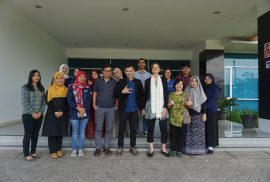
On Tuesday (03/19/19), the Center for Southeast Asian Social Studies (CESASS) Universitas Gajah Mada held a Writing for the International Social Science Journal with Prof. Dr. Judith Schlehe, an SES academic from Albert-Ludwig University of Freiburg and moderator Dr.phil. Vissia Ita Yulianto, one of the PSSAT UGM researchers.

The workshop which was held at the UGM PSSAT Library was attended by 11 participants from various institutions, including the Faculty of Social and Political Sciences of Universitas Gajah Mada, Religious and Cultural Sciences of Universitas Sanata Dharma, and Universitas Merdeka Madiun. read more

Tackling Migration Issues: Does Indonesia Provide Adequate Legal Protection to Refugees and Asylum Seekers?

Academic EssayEconomic and Social Welfare Friday, 22 February 2019

In the midst of the global refugee crisis, there has been much discussion regarding the management of refugees and asylum seekers in the developed world, however, this issue has been somewhat overlooked in Indonesia. Historically, Indonesia has been utilised as a transit country, due to its geographical location, archipelago geography, and bureaucratic functioning.   This trend has continued in recent years – in 2016, approximately 13,829 refugees arrived in Indonesia.  However, whilst Indonesia may still be characterised as a transit country, this reality is quickly changing, particularly as both Australia and the United States, two primary re-settlement nations, have decreased their refugee intake.  In 2016, 761 refugees were resettled to the US, and 347 to Australia, almost a 50% decrease in settlement from the previous year.  A drop in re-settlement rates, coupled with an inevitable increase in re-settlement waiting periods, has contributed to the transformation of Indonesia’s role as a country that merely acts as a place of transit, to a destination where refugees are now spending a significant amount of time.  Given these circumstances, the need for a more robust solution in the Government’s approach and attitude towards refugees has become evident. read more

Road Traffic Accidents in Vietnam: Cause and Solutions

Academic EssayEconomic and Social Welfare Tuesday, 22 January 2019

Traffic accidents still remain as a critical problem in Southeast Asia. Based on the report of the ASEAN Regional Road Safety Strategy in 2016, the biggest risk faced by most ASEAN countries is traffic accidents caused by the considerable number of two-wheeled vehicles as the primary transportation. The number of trauma due to traffic accidents is quite high in ASEAN. Compared with other ASEAN countries, Vietnam becomes one of the countries with the highest mortality rate, which is 23,60% of 10,000 per population according to Bloomberg read more

Conference Proceeding “Social Science in the Age of Transformation and Disruption: Its Relevance, Role and Challenge” (2018)

Proceeding Friday, 18 January 2019

Conference Proceeding “Social Science in the Age of Transformation and Disruption: Its Relevance, Role and Challenge” (2018)

The publication of this proceeding of the International Symposium on Social Science 2018 has been planned with the support from UGM, CESASS, and Dikti. Contain the abstracts and papers presented at the conference, it discuss the issues in social sciences using various perspectives and approaches.

The Secret of Existence of Traditional Game in Vietnam

Academic EssayEconomic and Social Welfare Saturday, 22 December 2018

Changing social layers in society are inevitable things during the globalization era. Technological progress becomes the most observable thing to see. The movement from traditional to modern technology is usually called as modernization. This happens due to the innovations of the world scientists which bring some impacts for the entire layers of society. The positive impact of modernization on human beings can be seen from facilitation in daily activities. For example, labor who initially worked manually to produce goods might take several days to complete. Because of technological support, labor now is able to produce more and faster goods. read more

[SEA Chat #10] Panel Discussion

Activity Saturday, 8 December 2018

On Friday (7/12/18), Taylah Bell (Murdoch University & ACICIS Study Indonesia), Zoe Croucher (La Trobe University & ACICIS Study Indonesia), Angelo Wijaya (Gadjah Mada University), and Anisa Dian Larasati (Gadjah Mada University ) present at the UGM PSSAT Library to provide material on A Comparative Analysis of Blasphemy Laws in Singapore and Indonesia, ASEAN’s Role in Natural Disasters, Philippines’ Approach to South China Sea Dispute, and Return to Education: Any Human Capital Improvements in Indonesia in SEA Chat # 10: Panel Discussion. read more

A Portrait of Southeast Asia’s Illegal Wildlife Trade Reality

Academic EssayLaw & Human Rights Thursday, 22 November 2018

Introduction

If there’s one thing that Southeast Asia should be known for, it is one thing; Diversity. This region is the home to many cultures, belief, traditions, cuisines that extends all the way to its rich biodiversity. The region hosted millions of species that ranges from both animals and plants. Many states in this region are in fact, aware of this fact and the notion of this leads majority of states in Southeast Asia to sign and ratify the CITES (Convention on International Trade in Endangered Species of Wild Flora and Fauna 1975 ) within their national legislation, as a measure taken to protect 3000 species of flora and fauna. In Indonesia, CITES has already been ratified into Law no 5 Year 1990 for the conservation of living resources and Ecosystems. The ratification process itself are divided into 3 (three) criteria in which the former one (1) are deemed the most effective, while the latter one is the deemed ineffective (3) due to the lack of alignment between the content within the legislation and the aforementioned conventions. read more

Communication and Politics of Disaster in Indonesia: Analysis of the Multi-Layered Responses to Maritime Disaster in Semarang and Aceh

research Saturday, 10 November 2018

This research by Dr.phil. Hermin Indah Wahyuni, Theresia Octastefani, M.AP., M.Pol.Sc, Muhammad Rum, IMAS, and Prof. David Robie from Program Hibah Kolaboratif Internasional Fakultas ISIPOL UGM in 2018 is intended to analyse the communication and politics of disaster in Indonesia through an examination of the multi-layered responses to two maritime disasters: tidal flooding in Semarang and the threat of tsunamis in Aceh. Although these maritime disasters have different characteristics, both were destructive. While tidal flooding in Semarang has been a slow-onset disaster, tsunamis in Aceh arrive suddenly. Tidal flooding has occurred along the northern coast of Java for decades, but yet to be mitigated; in fact, it has only expanded and caused more damage. Meanwhile, the 2004 tsunami in Aceh was the largest maritime disaster ever experienced in Indonesia, killing hundreds of thousands, causing massive destruction, and creating a number of social problems that remain even today. The main vision of the Joko Widodo (Jokowi) government to reaffirm Indonesia’s status as a strong maritime country cannot be optimally realised, and may even be hindered, if these disasters cannot be addressed. read more

1…2223242526…34

Recent Posts

  • Exploring Academic Pathways with Dr. Priyambudi Sulistiyanto
  • International Partner Supports CESASS in Public Hearing on the Rector’s Regulation on Research Centers
  • UGM Strengthens Role of Research Centers to Support Tridharma and Regional Studies
  • UGM Reinforces Regional Collaboration to Advance Green Skills and Green Jobs
  • Improving Regional Studies Through Convergent Scholarship
Universitas Gadjah Mada

Center for Southeast Asian Social Studies
Universitas Gajah Mada

Gedung PAU, Jl. Teknika Utara
Daerah Istimewa Yogyakarta 55281
pssat@ugm.ac.id
+62 274 589658

Instagram | Twitter | FB Page | Linkedin | Youtube

© Universitas Gadjah Mada

KEBIJAKAN PRIVASI/PRIVACY POLICY