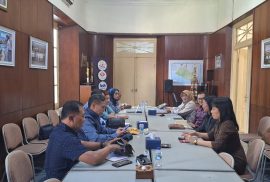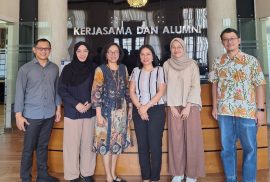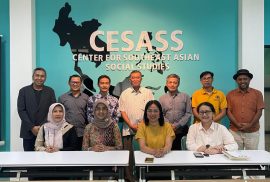
Yogyakarta, March 12, 2026 — Researchers from Universitas Gadjah Mada (UGM) are strengthening collaboration with industry partners to advance the development of green skills and green jobs in Indonesia and across Southeast Asia. Through an initiative led by the Center for Southeast Asian Social Studies (CESASS), the UGM team, involving the School of Applied Sciences and the Department of Geodetic Engineering, recently engaged with the Indonesian Chamber of Commerce and Industry (KADIN) to explore how national policy frameworks for green employment can be effectively implemented at the industry level.
short news
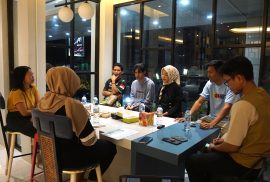
Yogyakarta, February 27 & March 9, 2026 — Multidisciplinary dialogue is more important today because the challenges we face are indeed complex, interconnected, and global in scope. Issues such as climate change, artificial intelligence, public health, socio-cultural and environmental justice, Asean youth and (un)employment, and economic inequality cannot be solved solo by one field alone. For instance, climate solutions require collaboration between environmental scientists, engineers, economists, and policymakers, while advances from companies like OpenAI raise not only technical questions but also ethical, legal, and social concerns. As technology evolves faster than regulation and cultural adaptation, open dialogue across disciplines ensures innovation remains responsible, balanced, and aligned with human values.
Yogyakarta, February 27, 2026 — Eastern Indonesia is home to some of the most pristine marine and terrestrial ecosystems in the world, including coral reefs, mangrove forests, and endemic wildlife. Many of these eco-islands remain largely off the mainstream tourism map, offering unique opportunities for sustainable tourism that can support both environmental conservation and local communities. Promoting responsible travel can showcase the region’s natural wonders while preserving them for future generations, emphasizing the need for careful planning and sustainable infrastructure development.
Yogyakarta, Febuary 26, 2026 — There is growing public concern that poor waste management may contribute to the spread of disease—an issue that remains as urgent today as ever.
This topic was raised by Dr. Viola Schreer, a German anthropologist, during her recent visit to CESASS. Dr. Schreer, who currently works as postdoc researcher at the Institute of Social Anthropologist at the Austrian Academy of Sciences, has long-standing research experience in on human-environmental relations in Indonesia, particularly Central Kalimantan. She has been working in the region for since 2009, and is keen to further explore waste management challenges in Indonesia. Notably, Dr. Schreer speaks fluent Bahasa Indonesia and Ngaju Dayak, the lingua franca of Central Kalimantan, enabling her to engage directly and meaningfully with local communities.
East Kalimantan, Febuary 8–14, 2026 — Center for Southeast Asian Social Studies at Universitas Gadjah Mada (CESASS UGM) continues to be committed to fostering student involvement in research as part of its mission to promote academic excellence and evidence-based policy development. Through its various research initiatives, the center provides students with opportunities to participate directly in fieldwork, data collection, analysis, and research dissemination.
By engaging students in ongoing projects, CESASS seeks to bridge the gap between classroom learning and real-world research experience. This approach not only enhances students’ research competencies but also equips them with practical skills that are essential for their future academic and professional careers.
East Kalimantan, Febuary 8–14, 2026 — Center for Southeast Asian Social Studies at Universitas Gadjah Mada (CESASS UGM) research team conducted fieldwork in East Kalimantan to examine socio-cultural transformation and environmental justice in the context of Indonesia’s capital relocation project, Ibu Kota Nusantara (IKN).
Recognizing that the implications of the new capital extend beyond its administrative boundaries, the team has expanded the locus of research to encompass East Kalimantan more broadly. This approach enables a deeper understanding of interconnected processes affecting communities, ecosystems, and governance structures across the province.
Yogyakarta, Febuary 3, 2026 — Across Indonesia’s cities, rooftops stretch quietly under the tropical sun. Often unnoticed, rooftops hold more than shelter, representing untapped economic and environmental value.
These pressing issues framed the discussion at the latest CESASS Chat forum hosted by the Center for Southeast Asian Social Studies at Universitas Gadjah Mada (CESASS UGM), under the theme “GeoSpectra: AI-Based Geospatial Modelling for Rooftop Photovoltaic Assessment and Property Tax Valuation in Indonesia.”
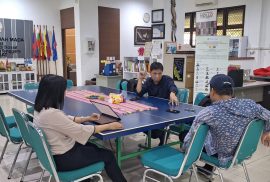
Yogyakarta, December 12, 2025 — Center for Southeast Asian Social Studies, Universitas Gadjah Mada (CESASS UGM) hosted a strategic visit and discussion with Pusat Riset Sistem Peradilan Pidana, Universitas Brawijaya (PERSADA UB). The visit was undertaken as an institutional learning initiative supporting PERSADA UB’s formulation of strategies toward Pusat Unggulan Iptek Perguruan Tinggi (PUI-PT) or Center of Excellence (CoE) under the Ministry of Higher Education, Science, and Technology framework.
Busan, December 2, 2025 — Women scholars and leaders from ASEAN Member Countries (AMCs), including Thailand, Indonesia, the Philippines, Myanmar, Lao, Cambodia, and Vietnam, signed Busan Global Women’s Policy Network. Together with South Korea and the Republic of Kazakhstan, the joint declaration shared a commitment to a sustainable and gender equal future.

Aligned with the UN Sustainable Development Goals—especially Goal 5 (Gender Equality) and Goal 8 (Decent Work and Economic Growth)—the network functions as a collaborative platform to promote women’s rights, economic empowerment, leadership, and inclusive education. It also supports Busan’s vision to become a global hub for international cooperation on women’s development.
Yogyakarta, November 28, 2025 — “Aquaculture and mangrove clearance sit at the intersection of Indonesia’s primary development challenges: food insecurity, intransigent poverty, and climate instability.” This issue formed the central discussion of CESASS-CHAT #4, hosted by the Center for Southeast Asian Social Studies at Universitas Gadjah Mada (CESASS UGM).
The session featured Edward Atkinson, a student of International Security Studies and Development Studies at the Australian National University (ANU). He delivered a presentation on the topic of “Aquaculture and Climate Resilience in Indonesia”.